The good news is that damp does not always indicate a major issue. In many cases, it can be linked to ventilation, maintenance or lifestyle factors. However, some forms of damp can lead to more significant property defects if left unresolved.
When purchasing a property, a professional survey can help identify visible signs of damp, highlight potential causes and recommend whether further investigation may be needed. Understanding what surveyors look for can help buyers make informed decisions and avoid unexpected surprises later.
Why Damp Matters
Moisture can affect both the condition of a property and the experience of living in it.
If moisture enters a building or becomes trapped indoors, it can contribute to:
- Mould growth
- Damage to plaster and decorations
- Timber decay
- Reduced energy efficiency
- Unpleasant odours
- Potential health concerns for occupants
Importantly, not all damp has the same cause. Identifying the source is often the key to understanding both the severity of the issue and the appropriate solution.
The Different Types of Damp
Condensation
Condensation is one of the most common causes of moisture-related issues in UK homes.
It occurs when warm, moisture-laden air comes into contact with colder surfaces such as windows, external walls or uninsulated areas.
Common signs include:
- Water droplets on windows
- Black mould around window frames
- Mould in corners of rooms
- Moisture in bathrooms and kitchens
Condensation is often linked to inadequate ventilation rather than a structural defect. Modern lifestyles can generate significant amounts of moisture through cooking, showering and drying clothes indoors.
Penetrating Damp
Penetrating damp occurs when water enters the building from outside.
Potential causes include:
- Defective roof coverings
- Damaged guttering
- Cracked brickwork
- Faulty pointing
- Leaking pipes
Unlike condensation, penetrating damp is often localised to a specific area and may worsen during periods of heavy rainfall.
Surveyors will look for signs of water ingress and identify visible defects that may be allowing moisture to enter the property.
Rising Damp
Rising damp refers to moisture travelling upwards through walls from the ground.
While often discussed, genuine rising damp is generally less common than many people assume.
Possible indicators may include:
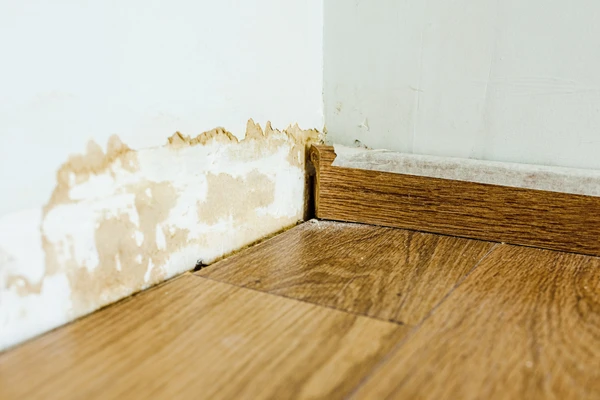
- Damp patches at low level
- Salt deposits on walls
- Deteriorating skirting boards
- Peeling paint near floor level
Where signs suggest rising damp could be present, surveyors may recommend further specialist investigation to establish the exact cause and extent of the issue.
What Surveyors Look For
During a property survey, the surveyor will assess accessible areas of the property and look for visible signs that may indicate moisture-related problems.
This may include:
Internal Signs
- Damp staining on walls and ceilings
- Peeling wallpaper or paint
- Mould growth
- Musty odours
- Damaged plaster
- Signs of timber deterioration
External Signs
- Blocked or damaged gutters
- Defective downpipes
- Cracked render
- Missing roof tiles
- Poor drainage around the property
- Defects in external walls
Surveyors consider the overall condition of the building and assess whether visible defects may be contributing to moisture problems.
It is important to remember that a survey is primarily a visual inspection. Surveyors cannot see inside walls or beneath floors without opening up the structure, so recommendations for further investigation may sometimes be necessary.
Is Damp Always a Deal-Breaker?
Not necessarily.
One of the biggest misconceptions among buyers is that any mention of damp means they should walk away from a property.
In reality, many homes—particularly older properties—will display some signs of moisture-related issues. The important factor is understanding:
- The likely cause
- The extent of the issue
- The potential cost of repairs
- Whether the problem is ongoing or historic
A survey helps provide context, allowing buyers to make informed decisions rather than reacting purely to the presence of damp.
In some cases, survey findings may help buyers budget for future works or negotiate with the seller before proceeding.
Older Properties and Damp
Older homes often perform differently from modern buildings.
Traditional construction methods were designed to allow buildings to breathe and manage moisture naturally. Introducing modern materials or inappropriate repairs can sometimes contribute to moisture problems.
This is one reason why older properties may benefit from a more detailed survey, particularly if they have undergone significant alterations over time.
A surveyor can help identify features that may affect how moisture behaves within the building and explain any associated risks.
Why Early Advice Matters
Identifying potential damp issues before exchange can help avoid delays, unexpected costs and disputes later in the transaction.
A survey provides valuable information about the property's visible condition and helps buyers understand whether further specialist investigations may be appropriate.
The earlier any concerns are identified, the more opportunity there is to assess the implications and make informed decisions.
Conclusion
Damp and mould are common issues, but they are not all the same. Understanding the difference between condensation, penetrating damp and rising damp can help buyers interpret survey findings more confidently.
A professional property survey can identify visible signs of moisture problems, explain likely causes and highlight areas that may require further investigation. Most importantly, it provides clarity at a crucial stage of the buying process.
Planning to buy a property? Speak to MAP Chartered Surveyors about the right survey for your needs.